2026 UPDATED GUIDE

The Ultimate Jewelry Laser Welder Comparison

We tested and compared the top laser welding machines on the market — evaluating power output, precision, weld quality, ease of use, and value — so you can invest in the right equipment for your jewelry workshop.

12+

Models Tested

200+

Hours of Testing

98%

Weld Precision

4.8/5

Avg. Reader Score

Why Comparing Laser Welders Matters

Jewelry laser welders vary widely in power, beam quality, and control precision. Choosing the wrong machine can mean weak welds, discoloration, or wasted material. Our comparison breaks down the specs that actually matter for jewelers, goldsmiths, and repair shops.

Power & Wavelength

Compare joule output, pulse width, and wavelength for gold, silver, platinum, and titanium welding.

Precision & Control

Evaluate spot size accuracy, targeting systems, and microscope quality for fine detail work.

Value for Money

Analyze total cost of ownership including maintenance, consumables, and warranty coverage.

Full Specification Comparison

Side-by-side data on the most popular jewelry laser welders available in 2026, tested under identical workshop conditions.

Model Overall Rating Power Output Wavelength Pulse Duration Weld Spot Size Cooling System Warranty Price Range
GoldSpot LW-200 Pro Editor's Choice ★★★★★ 4.9 200 Joules 1064 nm 0.1–20 ms 0.2–2.0 mm Closed-loop chiller 3 Years $8,900 – $10,500
PreciWeld JX-150 Pro Studio ★★★★★ 4.7 150 Joules 1064 nm 0.2–15 ms 0.3–1.8 mm Air + water hybrid 2 Years $6,500 – $7,800
SilverBeam LT-100 Best Budget ★★★★☆ 4.3 100 Joules 1064 nm 0.5–12 ms 0.4–1.5 mm Fan-cooled 1 Year $3,200 – $4,100
TitanWeld XR-300 Heavy Duty ★★★★★ 4.6 300 Joules 1064 nm 0.1–25 ms 0.2–2.5 mm Closed-loop chiller 3 Years $11,200 – $13,000
CraftLine EasyWeld 80 Entry Level ★★★☆☆ 3.9 80 Joules 1064 nm 1–10 ms 0.5–1.5 mm Passive/fan 1 Year $2,100 – $2,900
MicroFuse Compact 120 Compact Design ★★★★☆ 4.4 120 Joules 1064 nm 0.3–14 ms 0.3–1.6 mm Air-cooled 2 Years $4,800 – $5,600

*Prices are approximate and may vary based on region, accessories, and current promotions.

Our Top 3 Recommended Models

A closer look at the standout performers from our comparison — chosen for balance of power, precision, and price.

#1 PICK

GoldSpot LW-200 Pro

★★★★★ 4.9/5
  • Power200 J
  • Best ForFine Jewelry & Repair
  • CoolingClosed-loop
  • Warranty3 Years

Exceptional beam stability and an intuitive touchscreen interface make this the top choice for professional jewelers needing consistent, high-quality welds.

Check Latest Price

PreciWeld JX-150

★★★★★ 4.7/5
  • Power150 J
  • Best ForStudios & Workshops
  • CoolingAir + Water Hybrid
  • Warranty2 Years

A great balance of performance and affordability, ideal for growing studios that need reliable output without the premium price tag.

Check Latest Price

SilverBeam LT-100

★★★★☆ 4.3/5
  • Power100 J
  • Best ForSmall Business & Hobbyist
  • CoolingFan-cooled
  • Warranty1 Year

The best entry point into laser welding, offering solid performance for silver and gold repairs at a fraction of the cost of pro-level machines.

Check Latest Price

How to Choose the Right Laser Welder

Follow these key steps before making your investment. Understanding your workshop's specific needs will save you money and prevent buyer's remorse.

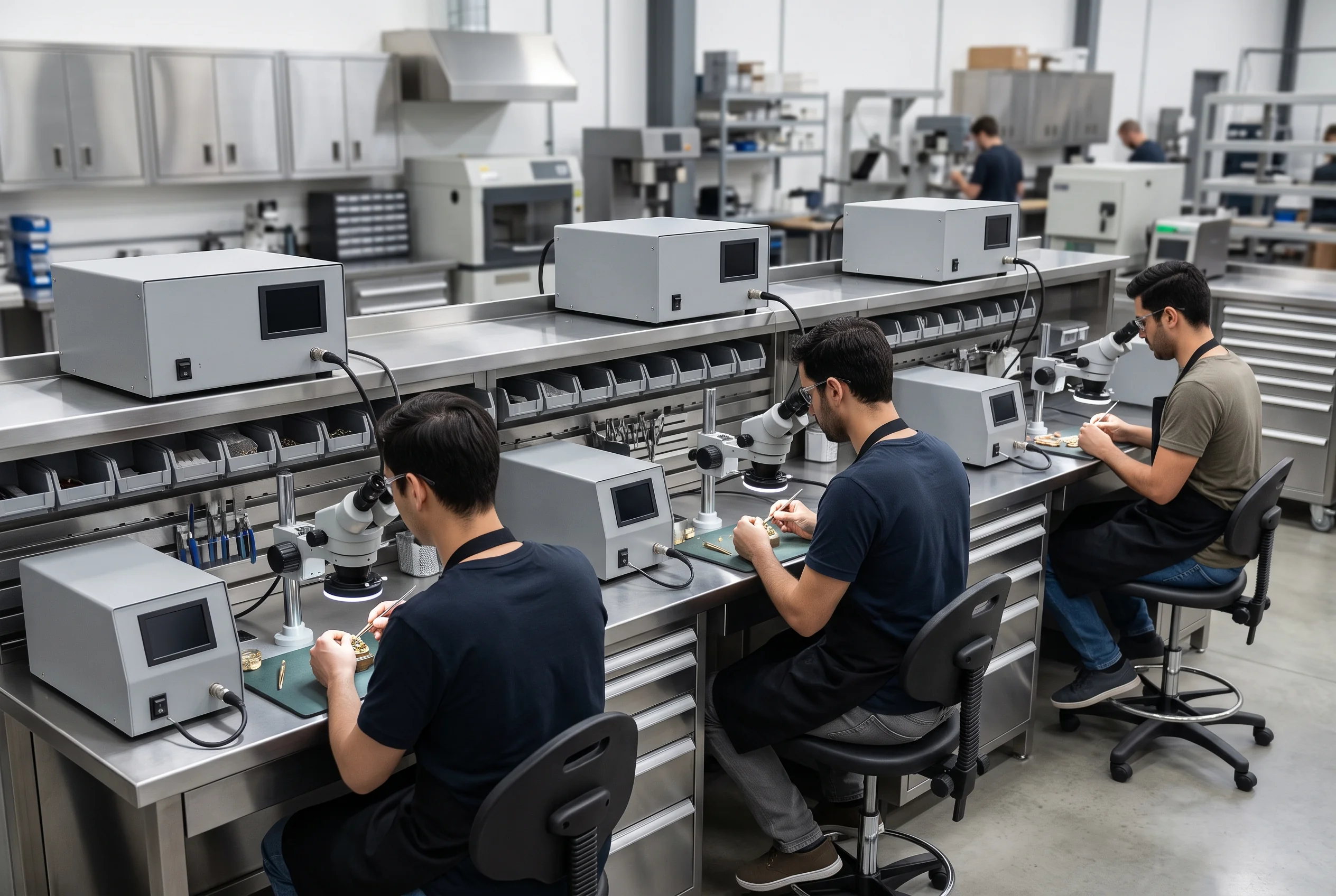
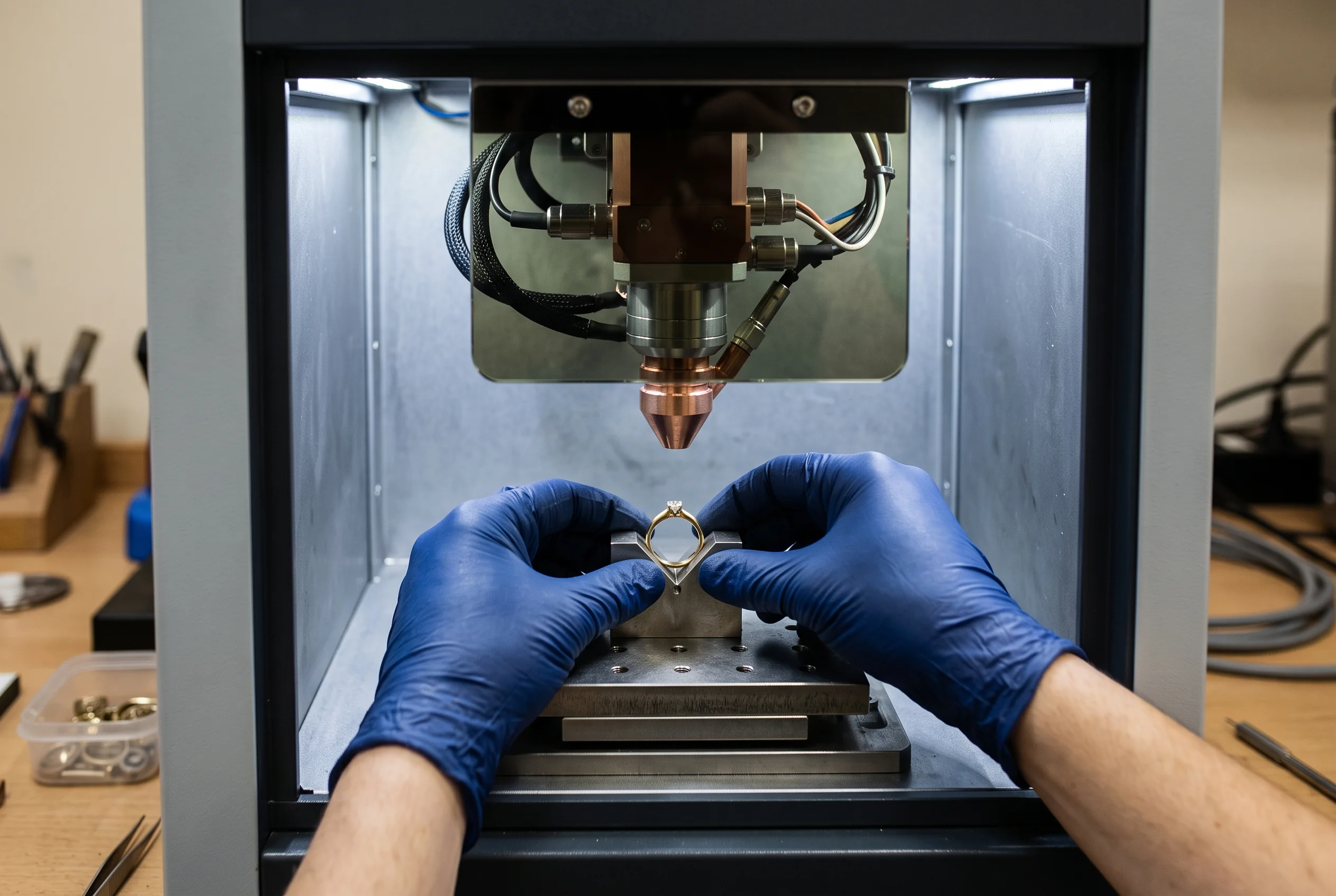
Jewelry laser welder in use
1
Assess Your Material Types

Different metals (gold, silver, platinum, titanium) require different power settings and wavelengths. Choose a machine with a wide adjustable range.

2
Determine Required Power Output

Hobbyists and small repair shops can manage with 80–120 joules, while production studios benefit from 150–300 joules for thicker joins.

3
Evaluate Cooling & Duty Cycle

Closed-loop water cooling supports longer continuous use, which matters for high-volume workshops running the machine for hours daily.

4
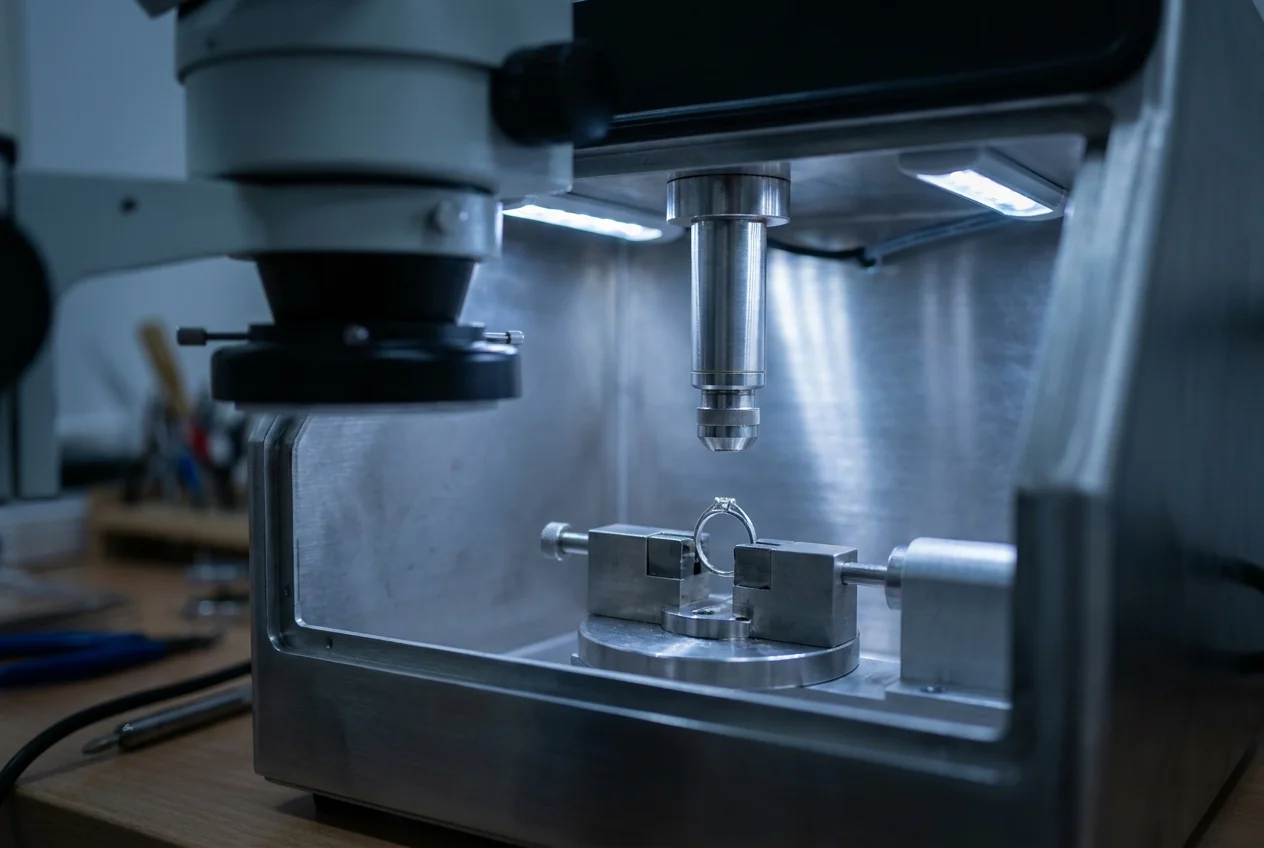
Check Optics & Targeting System

A high-quality microscope or camera targeting system dramatically improves weld accuracy, especially for intricate designs and stone settings.

5
Consider Total Cost of Ownership

Factor in warranty length, replacement flash lamps/diodes, service network, and training resources — not just the sticker price.

Pulse vs. Continuous Wave Welders

Understanding the two main laser welding technologies used in jewelry work.

Pulsed Laser Welders
  • ✔ Precise, controlled heat input — minimal thermal damage
  • ✔ Ideal for stone-set jewelry & fine detail repairs
  • ✔ Lower risk of discoloration on gold/silver
  • ✘ Slower for large-scale production welding
Continuous Wave Welders
  • ✔ Faster weld speed for chains & bulk production
  • ✔ Deeper penetration for structural joins
  • ✘ Higher heat spread risk near gemstones
  • ✘ Requires more operator skill to avoid overheating

Frequently Asked Questions

Common questions from jewelers researching laser welding equipment.

For most small repair shops, a machine in the 80–150 joule range is sufficient for typical gold and silver ring sizing, prong repairs, and chain welding. Higher power is only necessary for platinum or thick industrial pieces.

Laser welders offer superior precision with minimal heat spread, making them ideal for gemstone-set pieces where torch heat could damage stones. They also reduce material loss and produce cleaner, less visible welds.

Entry-level machines start around $2,000–$3,000, mid-range professional units run $5,000–$9,000, and high-power industrial-grade welders can exceed $12,000 depending on features and brand.

Basic operation can be learned within a few hours, but mastering weld settings for different metals and joint types typically takes a few weeks of practice. Most manufacturers offer training sessions with purchase.

Regular maintenance includes cleaning the optics, replacing the flash lamp or diode periodically, checking coolant levels (for water-cooled units), and ensuring the protective lens is free of debris.

Ready to Upgrade Your Workshop?

Get our free downloadable checklist to compare specs side-by-side before you buy your next jewelry laser welder.

View Full Comparison Table